Council acts to strengthen long-term financial sustainability
Published on 21 May 2026
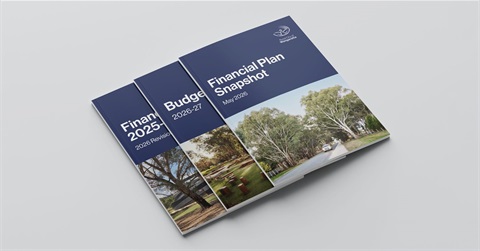
The Rural City of Wangaratta is taking action to strengthen its long-term financial sustainability, while continuing to prioritise core services and maintain community assets and infrastructure. At its Council Meeting on Tuesday, 26 May, Councillors will consider a revised 10-Year Financial Plan, the 2025/26 Quarter 3 Financial Forecast Review and the proposed 2026/27 Annual Budget.
Like many councils, Wangaratta is facing increasing financial pressure. Recent Victorian Auditor-General reporting in the 2024–25 Local Government Audits has highlighted growing financial pressures across local government, including rising costs and emerging sustainability challenges.
Years of rate capping, cost shifting, combined with a prolonged period of high inflation, have widened the gap between income and the cost of delivering services and maintaining infrastructure. Rising construction, fuel and other operating costs have further intensified these pressures.
In response, Council is acting early to improve its long-term financial sustainability. An independent review of Council’s 10-Year Financial Plan found that, without intervention, Council faces growing financial risks, including ongoing deficits and declining cash balances. The review recommends structural savings of about $3 million a year through a combination of service changes, efficiency improvements and new revenue sources to return Council to sustainable underlying surpluses.
Ahead of next week’s Council Meeting, Chief Executive Officer Matt Nelson said:
“Council has already begun taking action to improve its financial position, increasing projected cash balances by $3.7 million.”
“Over the past 12 months, Council has reduced operating costs, reviewed discretionary spending, adjusted the timing and scale of capital works, and made difficult but necessary decisions to reduce future liabilities, including exiting the CoStore agreement.”
“These decisions have not been taken lightly, but they are aimed at improving Council’s financial position over the medium and long term.”
2025/26 Quarter 3 Financial Forecast Review
Council’s Quarter 3 forecast shows a challenging year‑to‑date position. Since Quarter 2, the projected year-end accounting result has shifted from a $5.69 million deficit to an $11.99 million deficit, while the adjusted underlying operating deficit has increased by $3.66 million.
These movements are predominantly timing-related, with $5.37 million of capital works deferred to the next financial year due to multi-year project delivery and the timing of capital grants. $1.70 million also relates to non-cash items.
There have also been shortfalls in planned user-fee income of $775,000, including Aged Care due to service reforms, along with continued pressures in Waste Services driven by inflation, fuel and contractor costs.
To minimise unfavourable cash movements, Council has identified further materials and services savings of $798,000 as well as savings to the capital works budget of $315,000.
Chief Executive Officer, Matt Nelson said:
“Council’s short‑term cash position remains stable. The Quarter 3 Forecast reinforces the need for continued focus on financial management and directly informs Council’s Financial Sustainability Program and the 2026/27 Budget.”
Proposed 2026/27 Annual Budget
Council’s proposed 2026/27 budget outlines a $422,000 improvement in the cash balance, with an adjusted underlying operating deficit of $3.56 million. The budget responds to ongoing financial pressures, including rising service delivery costs, rate capping and uncertainty in government funding.
The Budget applies a 2.75 per cent rate increase, in line with the Victorian Government’s Fair Go Rates System, delivers a $22.27 million capital works program, and includes no new borrowings.
In preparing the Budget, Council has made a number of decisions to protect its cash balance, including reducing operating costs by more than $2.8 million.
In 2026/27, the community will notice some reductions in activity, including fewer events with the removal of the 2027 Outdoor Ball, and a reduction in community, tourism and event grants from $245,000 in 2025/26 to $121,000 in 2026/27. Council will also reduce spending on contractors, marketing, externally procured tourism services and strategy development, while limiting investment in new capital projects.
Most user fees and charges will increase by 3.4 per cent, broadly in line with inflation and service delivery costs, contributing to projected revenue of $13.34 million in 2026/27.
Waste services continue to face significant cost pressures, including rising transport, fuel and contractor costs, resulting in a 6 per cent increase in waste charges. The separate glass recycling service introduced last year will continue at no additional cost in 2026/27.
Chief Executive Officer Matt Nelson said the Budget strikes a balance between financial reality and the community’s long-term interests.
“This Budget reduces spending on events and grants and limits new initiatives. Council believes this is necessary to support a more sustainable financial future for Wangaratta.”